ultimate-guide · · 14 min read
Ceramic Coating Application Process Explained
By Editorial Team, Content Writer
Table of Contents
- Paint Inspection: What Gets Checked Before Anything Touches Your Car
- Ceramic Coating Preparation: Wash, Iron Removal and Clay Bar Decontamination
- Ceramic Coating Paint Correction: Fixing What the Coating Will Lock In
- Panel Wipe: The Step That Decides How Well the Coating Bonds
- The Ceramic Coating Application Process, Panel by Panel
- Top Coat and Layering: What Autotriz Top Coat Adds
- How Long Does Ceramic Coating Take to Cure?
- Ceramic Coating Aftercare: Maintenance Washes and Hydrophobic Behaviour
- Frequently Asked Questions
Last Updated: October 15, 2026
Paint Inspection: What Gets Checked Before Anything Touches Your Car
The ceramic coating application process explained properly always starts in the same place: with light on the paint and nothing else on the car. At GlossBoss, we inspect before we touch a panel, because what we find here decides everything that follows. Under LED inspection lighting, swirl marks, scratches, chips and any previous coating show up plainly. A paint depth gauge tells us how much clear coat we have to work with, which matters on the softer finishes found on many modern electric vehicles.
Ceramic Coating Preparation: Wash, Iron Removal and Clay Bar Decontamination
Ceramic coating preparation is a three-stage clean, and each stage removes something the previous one could not. A pH-neutral shampoo wash lifts road grime without stripping anything. Then comes iron fallout remover, which turns purple as it dissolves embedded metal particles from brake dust. Tar and sap removal follows, because neither budges with shampoo alone.
Why the Coating Needs a Perfectly Clean Surface
A ceramic coating bonds to the clear coat, not to dirt sitting on top of it. Bonded contaminants left behind create weak spots where the coating lifts early, beads poorly, or fails outright. That is why we finish preparation with a clay bar, which pulls out the remaining bonded contaminants a wash cannot reach. Clay leaves the surface glass-smooth, ready for the next stage.
Ceramic Coating Paint Correction: Fixing What the Coating Will Lock In
Ceramic coating paint correction is where the finish actually changes, because a coating locks in whatever sits underneath it, flaws included. Swirl marks, light scratches and the wash marring many new cars arrive with from dealership prep all get machined out here. We measure progress under inspection lighting rather than trusting a quick glance.
Single-Stage vs Dual-Stage Polishing
Single-stage polishing uses one combination of pad and compound to remove light defects and boost gloss. Dual-stage polishing follows a cutting step with a finer finishing polish, which removes deeper scratches a single stage cannot touch. Most daily-driven cars need single-stage work. Cars with heavier swirl marks, or paint that has never been corrected, usually justify the second stage. Machine polishing with the right compound and pad is what removes defects; no coating can hide them.
Panel Wipe: The Step That Decides How Well the Coating Bonds
A panel wipe removes the polishing oils left behind by compounding, and without it the coating cannot bond directly to the clear coat. Those oils sit invisibly on the surface and stop the coating from gripping properly. We wipe each panel with an isopropyl alcohol solution on a microfiber towel, then let it flash off completely. It looks like the smallest step in the job. In practice, it is the one that decides whether the coating performs for years or fails in months.
The Ceramic Coating Application Process, Panel by Panel
The ceramic coating application process runs panel by panel in a controlled indoor environment, never in direct sun or wind.
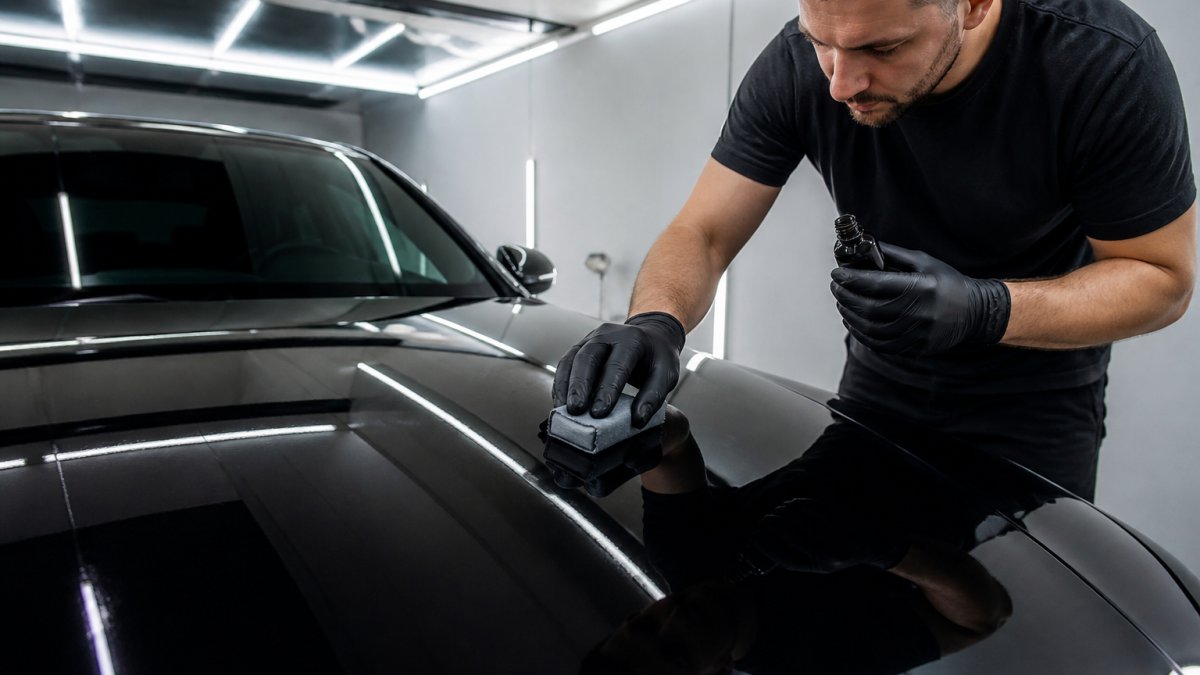
We apply the coating with an applicator block wrapped in a suede applicator cloth, working in sections roughly the size of a dinner plate on horizontal panels and a little larger on vertical ones.
After the coating flashes, which is the brief window where it turns from wet to tacky, we level it with a microfiber towel and buff off the residue.
High Spots, Streaking and Why Technique Matters
A high spot is a patch of coating left too thick to level off, and it dries as a visible smear or rainbow mark on the paint. Streaking comes from buffing too late, after the coating has already set.
A few defects show up often enough to name:
- High spots, too much product or a missed level pass. Catch them while the coating is still soft and you can re-level the area; once fully cured, they usually need machine polishing to remove.
- Streaks, buffing after the coating has set. Work smaller sections and keep a fresh microfiber towel for the final pass.
- Missed areas, usually at panel edges, door handles and under mirrors, where the applicator does not sit flat. Check each panel under inspection lighting before moving on.
- Premature flashing, the coating goes tacky almost immediately, usually because the panel is too warm or the bay is too dry. Move to a cooler panel and let the surface temperature settle.
If you are weighing a DIY application against professional installation, this is the stage where experience shows most. The product is the same; the difference is how quickly a trained eye spots a high spot forming and levels it before it sets.
| Stage | What Happens | Typical Time |
|---|---|---|
| Inspection | Paint depth, swirls, chips, prior coatings checked | 30-45 min |
| Wash and decontamination | pH-neutral wash, iron remover, tar and sap, clay bar | 2-3 hours |
| Paint correction | Single or dual-stage machine polishing | 3-8 hours |
| Panel wipe | Polishing oils removed with isopropyl alcohol | 30-45 min |
| Application | Panel-by-panel coating, flash, level and buff | 2-4 hours |
| Curing | Coating hardens; water exposure avoided | 24-48 hours |
Top Coat and Layering: What Autotriz Top Coat Adds
Layering adds a top coat over the base coating to boost slickness, gloss and ease of cleaning, and it is the final step on our top package. After the Autotriz 3D Matrix Pro base cures, we apply Autotriz Top Coat over it. The top coat does not replace the base layer's protection; it sits above it and takes the daily wear.
How Long Does Ceramic Coating Take to Cure?
How long does ceramic coating take to cure? The coating skins over within hours, but full curing takes days, and water exposure during that window can compromise the bond. It helps to separate two things that get muddled: hands-on time and vehicle downtime.
Curing happens in stages. The coating flashes and levels during application, then skins over within a few hours. From there it continues to cross-link and harden over the following days.
Temperature, Humidity and Workspace
Cure speed responds to the environment, which is one reason a controlled workspace matters. Most practitioners find a bay held around 20-25°C with moderate humidity gives a predictable flash time and an even cure. Cold slows the reaction and stretches flash time; heat speeds it up and shortens the window you have to level the coating. High humidity can accelerate skinning and trap moisture; very dry air can make the coating flash almost on contact.
Realistic Durability and Maintenance Expectations
Curing is also where durability is decided. A coating applied over a properly decontaminated, corrected and panel-wiped surface bonds evenly and holds its performance far longer than one applied over polishing oils or bonded contaminants.
Water beading is a useful indicator but not a reliable standalone measure of protection. A coated car can still bead while the layer underneath is thinning, and a dirty or clogged coating can stop beading while still protecting the paint.
Ceramic Coating Aftercare: Maintenance Washes and Hydrophobic Behaviour
Ceramic coating aftercare comes down to regular maintenance washes with a pH-neutral shampoo and clean microfiber towels. Hydrophobic behaviour, where water beads and rolls off the surface, tells you the coating is still working. When beading weakens, a decontamination wash and a fresh top coat usually restore it. Avoid automatic brush washes and harsh detergents, which wear any coating down faster.
Every stage in this process exists to protect one thing: the bond between coating and clear coat. GlossBoss specialises in ceramic coating for Tesla and modern luxury vehicles, using Autotriz 3D Matrix Pro with Autotriz Top Coat on our top package, applied by owner and installer Matty Ryan in a controlled indoor bay. If you want a finish that holds its gloss and beads water for years, protect your paint properly.
Frequently Asked Questions
Is it good to apply ceramic coating on a car?
Yes, when the paint is properly prepared first. A ceramic coating bonds to the clear coat and gives you easier cleaning, stronger hydrophobic behaviour and better resistance to bird droppings, tree sap and UV than wax. The catch is that it locks in whatever sits underneath it, so swirl marks, scratches and chips need addressing during paint correction before the coating goes on. Applied over clean, corrected paint, it is a genuine step up from regular waxing.
How is ceramic coating applied?
The coating is applied panel by panel in a controlled indoor environment. Your installer wraps a suede applicator cloth around an applicator block, loads it with coating drops and works in small sections using a crosshatch pattern for even coverage. After the flash time, when the coating starts to set, it is levelled and buffed off with a microfiber towel. Miss that window and you get high spots, which is why technique and lighting matter as much as the product.
How long does ceramic coating take to apply?
A full ceramic coating application usually runs across one to two days or more, because the stages before the coating itself take the longest. Wash and chemical decontamination, clay bar treatment, paint correction and a panel wipe all come first. Paint correction alone can take most of a day on a car with heavy swirl marks. Your installer should give you a realistic timeline after inspecting the paint, not before.
Does paint correction need to be done before ceramic coating?
It depends on your paint condition. A coating is transparent and only a few microns thick, so it will not hide swirl marks or scratches. If your car has dealership-installed swirls, wash marring or light scratches, single-stage or dual-stage machine polishing removes them before the coating seals the finish. If the paint is already in good condition, a lighter correction pass may be enough. Inspection under proper lighting decides this.
What happens if ceramic coating is not levelled properly?
Uneven coating that is not levelled and buffed within the flash time leaves high spots. These show up as darker, streaky patches or a rainbow haze under direct light, and they are more than cosmetic: a high spot cures harder and unevenly, so it can be difficult to remove later without polishing that area back. Good lighting and working in small sections are the two things that prevent it.
How long does a ceramic coating need to cure?
Flash time, when the coating sets enough to be buffed off, is minutes. Full curing is much longer. Most coatings need around 24 hours before any water exposure and about seven days before the first wash, so the coating can harden without interference. Humidity and temperature affect this, which is why a controlled indoor workspace matters. Your installer will give you exact timings for the product used.
Can ceramic coating protect against sun, bird droppings and tree sap if I park outside?
It helps, but it is not immunity. A coating makes the surface hydrophobic and slick, so bird droppings, tree sap and tar sit on top rather than etching in, and they wipe off far more easily. UV exposure is also reduced. What matters is how quickly you remove contaminants. Leaving droppings on for weeks will still mark the clear coat, coated or not. Regular maintenance washes are what keep the protection working.
Will the application process damage my paint or the factory finish?
A correctly performed application does not damage paint. The coating sits on top of the clear coat, and the panel wipe uses isopropyl alcohol to remove polishing oils, not to strip paint. The real risk sits in the steps before: aggressive polishing on thin paint, or contamination left under the coating. That is why paint depth is measured during inspection and why the wash and decontamination stages are done properly rather than rushed.
Frequently asked questions
Is it good to apply ceramic coating on a car?
Yes, when the paint is properly prepared first. A ceramic coating bonds to the clear coat and gives you easier cleaning, stronger hydrophobic behaviour and better resistance to bird droppings, tree sap and UV than wax. The catch is that it locks in whatever sits underneath it, so swirl marks, scratches and chips need addressing during paint correction before the coating goes on. Applied over clean, corrected paint, it is a genuine step up from regular waxing.
How is ceramic coating applied?
The coating is applied panel by panel in a controlled indoor environment. Your installer wraps a suede applicator cloth around an applicator block, loads it with coating drops and works in small sections using a crosshatch pattern for even coverage. After the flash time, when the coating starts to set, it is levelled and buffed off with a microfiber towel. Miss that window and you get high spots, which is why technique and lighting matter as much as the product.
How long does ceramic coating take to apply?
A full ceramic coating application usually runs across one to two days or more, because the stages before the coating itself take the longest. Wash and chemical decontamination, clay bar treatment, paint correction and a panel wipe all come first. Paint correction alone can take most of a day on a car with heavy swirl marks. Your installer should give you a realistic timeline after inspecting the paint, not before.
Does paint correction need to be done before ceramic coating?
It depends on your paint condition. A coating is transparent and only a few microns thick, so it will not hide swirl marks or scratches. If your car has dealership-installed swirls, wash marring or light scratches, single-stage or dual-stage machine polishing removes them before the coating seals the finish. If the paint is already in good condition, a lighter correction pass may be enough. Inspection under proper lighting decides this.
What happens if ceramic coating is not levelled properly?
Uneven coating that is not levelled and buffed within the flash time leaves high spots. These show up as darker, streaky patches or a rainbow haze under direct light, and they are more than cosmetic: a high spot cures harder and unevenly, so it can be difficult to remove later without polishing that area back. Good lighting and working in small sections are the two things that prevent it.
How long does a ceramic coating need to cure?
Flash time, when the coating sets enough to be buffed off, is minutes. Full curing is much longer. Most coatings need around 24 hours before any water exposure and about seven days before the first wash, so the coating can harden without interference. Humidity and temperature affect this, which is why a controlled indoor workspace matters. Your installer will give you exact timings for the product used.
Can ceramic coating protect against sun, bird droppings and tree sap if I park outside?
It helps, but it is not immunity. A coating makes the surface hydrophobic and slick, so bird droppings, tree sap and tar sit on top rather than etching in, and they wipe off far more easily. UV exposure is also reduced. What matters is how quickly you remove contaminants. Leaving droppings on for weeks will still mark the clear coat, coated or not. Regular maintenance washes are what keep the protection working.
Will the application process damage my paint or the factory finish?
A correctly performed application does not damage paint. The coating sits on top of the clear coat, and the panel wipe uses isopropyl alcohol to remove polishing oils, not to strip paint. The real risk sits in the steps before: aggressive polishing on thin paint, or contamination left under the coating. That is why paint depth is measured during inspection and why the wash and decontamination stages are done properly rather than rushed.
Tags: ceramic coating application, ceramic coating application process explained, ceramic coating preparation, ceramic coating paint correction, how long does ceramic coating take