blog · · 13 min read
Professional Paint Protection for Luxury Cars
By Editorial Team, Content Writer
Table of Contents
- Why Professional Paint Protection Matters for Luxury Vehicles
- Paint Protection Film for Luxury Cars: Durability and Real-World Performance
- Luxury Car Ceramic Coating: Technology and Application
- How Long Ceramic Coating Lasts and What Affects Durability
- Ceramic Coating Maintenance: Keeping Your Protection Effective
- Paint Preparation and Installation: What You Need to Know
- Comparing PPF, Ceramic Coating, and Wax: Which Suits Your Vehicle
- Frequently Asked Questions
Last Updated: October 14, 2026
Why Professional Paint Protection Matters for Luxury Vehicles
Professional paint protection for luxury cars is essential maintenance, not an optional extra. Resale value depends heavily on paintwork condition, and a single stone chip or swirl mark can cost thousands to repair while signalling a poor maintenance history to buyers.
Daily driving exposes your finish to constant threats: road debris, UV radiation, bird droppings, tree sap, and environmental contaminants degrade even factory paint. For luxury owners, this is asset protection, not just aesthetics.
Owners who delay professional paint protection face extensive paint correction costs later. The preventative approach always wins: professional paint protection creates a sacrificial barrier that absorbs damage your paint would otherwise suffer directly.
Paint Protection Film for Luxury Cars: Durability and Real-World Performance
Paint protection film (PPF) is a transparent, self-healing urethane layer applied directly to painted surfaces. It absorbs impact from road debris, minor scratches, and environmental contaminants while remaining virtually invisible, making it the most comprehensive protection available for luxury vehicles.
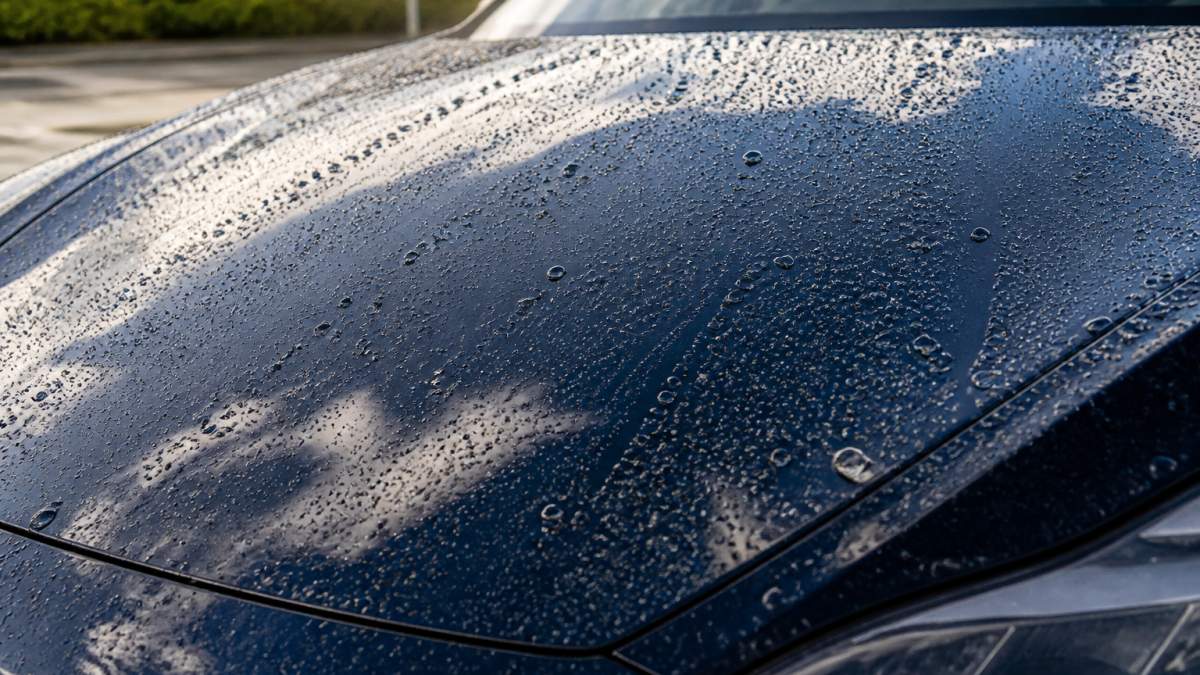
Modern PPF's self-healing technology is genuinely impressive: minor scratches and swirl marks disappear when the film is exposed to heat from sunlight or a heat gun, so damage that would permanently mark unprotected paint simply vanishes.
Performance depends on installation quality and film grade. Premium films maintain clarity and gloss for 7-10 years; budget films may yellow or cloud within 3-5 years, defeating the purpose.
PPF suits owners driving frequently in harsh conditions, coastal salt spray, heavy tree coverage, or regular outdoor parking. It's the most durable option for paint protection film for luxury cars, particularly on high-impact zones like the bonnet, front bumper, and door handles.
Luxury Car Ceramic Coating: Technology and Application
Ceramic coating creates a chemically bonded, glass-like layer on your paint. Unlike PPF's physical barrier, it bonds at the molecular level to your clear coat, creating a hydrophobic surface that sheds water, dirt, and contaminants.
Ceramic coatings use silicon dioxide particles suspended in a liquid carrier. Once applied and cured, they harden into a crystalline structure harder than factory clear coat, which is why professional ceramic coating delivers superior gloss and depth compared to traditional wax.
For luxury vehicles, ceramic coating enhances appearance, with richer colours and deeper, more vibrant gloss. Its hydrophobic properties make water bead and roll off, taking dirt with it, which reduces water spotting and makes maintenance washing easier.
Application matters enormously. Professional luxury car ceramic coating involves multi-stage preparation: decontamination, clay bar treatment, paint correction, and surface preparation. The coating is then applied in controlled, dust-contained conditions.
The result is a durable, high-gloss finish that lasts far longer than wax, and many owners report it feels like a permanent upgrade to their vehicle's appearance and protection.
How Long Ceramic Coating Lasts and What Affects Durability
Advertised lifespans are single numbers, but the one that matters is what your installer will actually warrant. A professional-grade coating over correctly prepared paint is commonly warranted for two to five years, with premium multi-layer systems up to seven or nine.
Durability is governed by four interacting variables:
Coating chemistry and solids content. Coatings are built around silicon dioxide (SiO2) or, in some formulations, silicon carbide or graphene-oxide additives in a solvent or water carrier. Active solids determine how much material remains once the carrier flashes off. High-solids coatings laid down in multiple layers build a thicker, denser film than single-layer products, resisting chemical attack and wash marring for longer.
Preparation quality. A coating bonds to the clear coat, not to contamination. If iron fallout, tar, or polishing oils remain, the coating sits on top of them and fails prematurely, often as patchy beading or localised lifting. Decontamination and paint correction are not optional upsells; they are the foundation of the durability claim.
Curing conditions. Most coatings need a controlled environment for the initial cure, typically 12 to 24 hours of dust-free, temperature-stable conditions, followed by a full-cure period of up to two weeks as the film cross-links. High humidity or direct sun can cause hazing, sweating, or uneven gloss that no aftercare will reverse.
Exposure and aftercare. A garage-kept vehicle in a temperate climate holds its coating noticeably longer than one parked outdoors in coastal salt spray, industrial fallout, or intense UV. Washing frequency, method, and product pH all affect degradation.
Coating failure rarely happens all at once. The usual progression: water beading becomes less tight and more irregular, then the surface loses slickness and holds dust, then contaminants etch into the coating rather than sitting on top, and finally it wears through in high-contact areas like the bonnet's leading edge and door tops.
Australian Consumer Law warranty and consumer guarantees
Ceramic Coating Maintenance: Keeping Your Protection Effective
Ceramic coating maintenance isn't complicated, but it is non-negotiable. The first two weeks are critical as the coating continues to cure and harden. Avoid washing for at least 7-14 days (follow your installer's guidance) so the coating bonds completely to your clear coat.
After curing, establish a regular routine: wash every two weeks under normal conditions, more often if parked outdoors or driven in harsh environments. Use pH-neutral car wash products designed for coated vehicles, as acidic or alkaline cleaners break down the coating prematurely.
Drying technique matters as much as washing. Use microfibre towels or air drying to prevent water spotting, since hard water minerals left to dry naturally can etch through the coating. Many owners use distilled water for final rinses or forced-air drying systems.
Avoid automated brush car washes, which scratch and degrade ceramic coatings. Touchless washes are acceptable occasionally, but hand washing remains the gold standard for maintaining professional ceramic coating for luxury cars.
Many installers offer annual ceramic coating top-ups or maintenance coatings that refresh the protective layer, extending the life of your original coating and maintaining optimal performance.
Paint Preparation and Installation: What You Need to Know
Professional paint protection begins with preparation, where most DIY attempts fail and professional installers earn their reputation. Proper preparation determines how well protection adheres and performs long-term.
Preparation involves several stages. First comes decontamination, removing embedded iron particles, tree sap, and industrial fallout via clay bar treatment or chemical decontaminants, eliminating contamination that would trap moisture under protection layers.
Next is paint correction, removing swirl marks, light scratches, and oxidation. Many luxury vehicles arrive with factory defects or dealer transport damage. Professional detailers use machine polishers with varying grit compounds, labour-intensive work that separates professional results from mediocre applications.
Surface preparation follows: the paint is cleaned thoroughly to remove polishing residues and contaminants. PPF requires an absolutely clean surface, as any dust or residue creates adhesion problems, while ceramic coating needs proper decontamination to ensure molecular bonding.
Installation technique varies by type. PPF requires precision, positioning the film, applying it bubble-free, and trimming edges perfectly, demanding skill and experience. Ceramic coating involves precise product mixing, controlled application temperature, and proper curing conditions.
Professional facilities maintain controlled environments, managing temperature, humidity, and dust for optimal application conditions, which is why professional installations deliver results DIY attempts cannot match.
Comparing PPF, Ceramic Coating, and Wax: Which Suits Your Vehicle
Most pages in this space promote one product. This section compares all three honestly, including where each one fails, because the right answer depends on how the vehicle is used rather than on which product is most expensive.
| Protection Type | Typical Durability | Impact Protection | Gloss Effect | Self-Healing | Ongoing Maintenance | Best For |
|---|---|---|---|---|---|---|
| Paint Protection Film (PPF) | 7-10 years (quality film, warranted) | Yes, absorbs stone chips and light abrasion | Neutral to slight satin; gloss films preserve factory finish | Yes, on minor scratches with heat | Low, wash as normal, inspect edges annually | High-impact zones, daily drivers, track use |
| Ceramic Coating | 2-5 years (warranted), up to 7-9 years premium | No, does not stop chips | High, deepens gloss and colour | Minor swirls only | Medium, pH-neutral washes, annual top-up | Overall gloss, easy cleaning, garage-kept cars |
| Wax / Sealant | 2-3 months (wax), 4-6 months (sealant) | No | Good, warm finish | No | High, frequent reapplication | Budget-conscious owners, show cars, short-term |
Where each one actually fails. PPF does not make paint invulnerable. A sharp, high-energy impact can still penetrate the film and mark the paint beneath, and film edges can lift if the installer did not wrap them properly.
How cost is actually structured. Quotes vary widely because the price is driven by paint condition, vehicle size, and how much disassembly is required.
Warranty and repairability. PPF warranties typically cover film defects such as yellowing, cracking, or delamination, but not impact damage, and they usually require the film to have been maintained to the manufacturer's schedule. A damaged PPF panel can be replaced individually, which is one of its practical advantages.
Choosing by use case.
- Daily driver, parked outdoors: PPF on the front end plus ceramic coating on the remainder. This is the most common recommendation because it addresses both impact damage and environmental contamination.
- Garage-kept weekend car: Ceramic coating alone is often sufficient, since the vehicle sees little stone-chip exposure and the priority is gloss and easy maintenance.
- Track or performance use: Full-front PPF is close to essential given the debris exposure, with ceramic coating on the rest for cleaning ease.
- Collectible or classic vehicle: Preservation matters more than gloss. A quality wax or a reversible sealant is often preferred because it can be removed without risk to original paint, and irreversible coatings may be viewed unfavourably by future buyers or concours judges.
The honest limitation. No product makes paint scratch-proof. PPF and ceramic coating reduce the rate at which damage accumulates and make cleaning easier, but they do not eliminate the need for careful washing, and they do not protect against every impact.
Frequently Asked Questions
How long does professional ceramic coating last on a luxury vehicle?
Professional-grade ceramic coating typically lasts 2-5 years, depending on application quality, product formulation, and maintenance practices. Environmental exposure, driving conditions, and how well you follow aftercare instructions significantly affect longevity. Regular washing and periodic inspection help maintain hydrophobicity and gloss. Some premium coatings perform longer under ideal conditions, but realistic durability requires consistent maintenance and protection from harsh elements.
Is ceramic coating or paint protection film better for a luxury car?
Both offer distinct advantages. Ceramic coating provides glossy aesthetics, hydrophobicity, and chemical resistance but doesn't shield against physical impact. Paint protection film offers superior protection against stone chips, scratches, and road debris but may alter appearance slightly. Many luxury-vehicle owners combine both: PPF on high-impact zones (bonnet, bumper, door edges) and ceramic coating over the entire vehicle for comprehensive protection and showroom-quality finish.
Does a luxury car need paint correction before ceramic coating?
Yes, professional paint correction is recommended before ceramic coating application. Existing swirl marks, minor scratches, and contamination become permanently sealed under the coating, so correction ensures a flawless finish. The preparation process includes decontamination and surface refinement to maximise gloss and durability. Skipping this step compromises the aesthetic result and may void warranty protection on premium coatings.
What maintenance does ceramic coating require?
Ceramic-coated vehicles need regular washing with pH-neutral shampoo every 2-4 weeks to maintain hydrophobicity and remove contaminants. Avoid automated car washes and abrasive products that can degrade the coating. Periodic professional maintenance (every 6-12 months) can include inspection and top-up treatments to restore water beading and protection. Proper maintenance extends durability significantly and preserves the investment in professional protection.
Frequently asked questions
How long does professional ceramic coating last on a luxury vehicle?
Professional-grade ceramic coating typically lasts 2-5 years, depending on application quality, product formulation, and maintenance practices. Environmental exposure, driving conditions, and how well you follow aftercare instructions significantly affect longevity. Regular washing and periodic inspection help maintain hydrophobicity and gloss. Some premium coatings perform longer under ideal conditions, but realistic durability requires consistent maintenance and protection from harsh elements.
Is ceramic coating or paint protection film better for a luxury car?
Both offer distinct advantages. Ceramic coating provides glossy aesthetics, hydrophobicity, and chemical resistance but doesn't shield against physical impact. Paint protection film offers superior protection against stone chips, scratches, and road debris but may alter appearance slightly. Many luxury-vehicle owners combine both: PPF on high-impact zones (bonnet, bumper, door edges) and ceramic coating over the entire vehicle for comprehensive protection and showroom-quality finish.
Does a luxury car need paint correction before ceramic coating?
Yes, professional paint correction is recommended before ceramic coating application. Existing swirl marks, minor scratches, and contamination become permanently sealed under the coating, so correction ensures a flawless finish. The preparation process includes decontamination and surface refinement to maximise gloss and durability. Skipping this step compromises the aesthetic result and may void warranty protection on premium coatings.
What maintenance does ceramic coating require?
Ceramic-coated vehicles need regular washing with pH-neutral shampoo every 2-4 weeks to maintain hydrophobicity and remove contaminants. Avoid automated car washes and abrasive products that can degrade the coating. Periodic professional maintenance (every 6-12 months) can include inspection and top-up treatments to restore water beading and protection. Proper maintenance extends durability significantly and preserves the investment in professional protection.
Tags: professional paint protection for luxury cars, paint protection film for luxury cars, luxury car ceramic coating, how long ceramic coating lasts, ceramic coating maintenance