how-to · · 12 min read
How to Estimate Paint Correction Time for Your Car
By Matty Ryan, Owner & Ceramic Coating Specialist, GlossBoss

Last Updated: November 1, 2026
Quick Summary
For most cars, paint correction takes somewhere between four hours and two full days, depending on how bad the paint is. There is no fixed number, because the time depends entirely on paint condition, so anyone quoting a timeframe without inspecting your car is guessing.
- One-stage paint correction on a well-kept car is usually a single day, with prep taking longer than the polish pass.
- Two-stage correction adds a cutting stage then a finishing stage, and is needed for heavy swirls, oxidation or wash damage.
- Hard paint resists cutting so passes take longer, while large vehicles like a Range Rover or Prado carry far more surface area.
- Clear coat is finite, so paint thickness readings are taken before polishing to confirm there is enough to work with safely.
- Most enthusiasts only need paint correction every few years, not annually, since correction removes clear coat.
Table of Contents
- What Paint Correction Involves and Why Time Varies
- One-Stage Paint Correction Time: What to Expect
- Two-Stage Paint Correction: When You Need It and How Long It Takes
- How Long Does It Take to Properly Polish a Car?
- Factors That Affect Paint Correction Duration
- How Often Should You Do a Paint Correction?
- Preparing for Your Paint Correction Appointment
- Book Your Paint Correction with GlossBoss
- Frequently Asked Questions
What Paint Correction Involves and Why Time Varies
Paint correction is the machine polishing process that removes swirl marks, light scratches and oxidation from your clear coat, restoring gloss and clarity before any coating goes on (Paint Correction Before Ceramic Coating: Pro 2026 Guide).
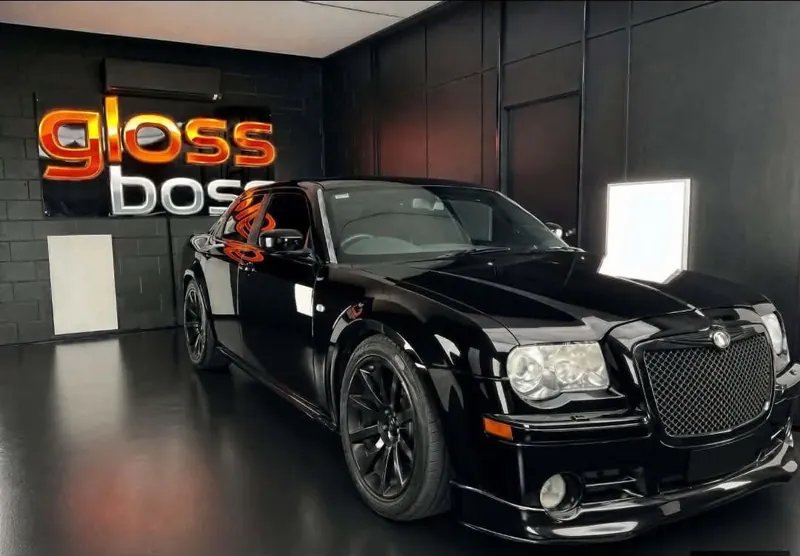
There is no fixed number, and anyone quoting one without inspecting your car is guessing.
Here's what the job actually involves:
- Wash and decontaminate the paint, including a clay bar treatment
- Inspect the paint under proper lighting and check paint thickness
- Mask edges, trims and badges
- Cut with an abrasive compound on a machine polisher
- Refine with a finishing polish to restore clarity
- Panel wipe and inspect before coating
Each stage takes as long as your paint demands. A garage-kept car with light swirling is a different job to a ute that's done years of highway driving and coastal parking.
If your paint already shows swirl marks, how swirl marks are corrected on a Tesla walks through the process on a specific car before you commit to a timeframe.
One-Stage Paint Correction Time: What to Expect
One-stage paint correction time on a well-kept car is usually a single day, but the stage-by-stage breakdown below shows how it adds up.
Here is the general sequence a one-stage appointment follows on a mid-size car:
- Inspection and paint-thickness readings, the car is assessed under consistent lighting, defects are mapped, and readings are taken to confirm there is enough clear coat to polish safely.
- Wash and chemical decontamination, tar, iron fallout and old wax or sealant are removed before any machine touches the paint.
- Clay bar or clay mitt, this removes bonded contamination that washing cannot shift. Skipping it means polishing grit into the clear coat.
- Masking, edges, trims, badges and any PPF or wrap seams are taped to protect them.
- Single polishing pass, one compound or polish step across the full car, working panel by panel.
- Panel wipe and final inspection, the paint is wiped with an IPA-based panel wipe to remove polishing oils, then inspected under proper lighting before any coating goes on.
The total time depends on the car and its condition. A large 4WD or a car with heavier swirling will take longer than a small sports car with mild swirling.
What most guides miss is that one-stage work still requires full preparation. Decontamination, masking and inspection do not disappear just because you are doing one polish pass. The polishing itself is the short part, and the prep is where a rushed job shows.
One-stage correction suits:
- Newer cars with mild swirling
- Paint that has been washed carefully with proper technique
- Owners who want gloss and coating readiness without chasing every defect
- Cars being prepared for a ceramic coating where the priority is a clean, consistent base rather than maximum defect removal
Black paint is the honest test here. It shows every remaining mark, so a one-stage job on black either looks excellent or exposes what was left behind. Does paint correction fix swirl marks on black cars? covers what is realistic on the most revealing colour.
Two-Stage Paint Correction: When You Need It and How Long It Takes
Two-stage paint correction takes considerably longer than a single stage, and the time depends on the car and its paint. A typical two-step correction is estimated at that range by LA Wrap and Tint School, and it's the standard preparation step before many ceramic coatings.
18 October 2026
Gloss Boss Premium Ceramic Coatings
Two stages means a cutting stage to remove defects, then a finishing stage to refine the finish. You need it when:
- Swirl marks are heavy or long-standing
- There's oxidation, water spotting or wash damage
- The car has had years of automatic car washes
- You want maximum gloss and clarity before coating
Multi-stage correction goes further again, and it's usually reserved for show cars or paint with serious defects. The trade-off is simple: more stages means more time, more labour and more clear coat removed.
Watch out: clear coat is finite. Every cutting pass removes a small amount of it, which is why paint thickness readings matter before anyone starts polishing.
How Long Does It Take to Properly Polish a Car?
Properly polishing a car is slow, careful work, and the time depends on the number of stages and the condition of the paint. Polishing is the slow, careful part of correction, not a quick wipe-over.
The variables that stretch it out:
- Hard paint resists cutting, so passes take longer
- Soft paint finishes quickly but demands care to avoid marring
- Large vehicles like a Range Rover or Prado carry far more surface area than a Model 3
- Tight areas around mirrors, spoilers and door handles eat time
A common mistake is rushing the finishing stage. Cut too aggressively and leave haze, and you'll spend another few hours fixing it. Good machine polishing is patience with a polisher in your hands.
Factors That Affect Paint Correction Duration
Vehicle size and paint condition drive the estimate more than anything else, but the reasons matter if you want to understand a quote.
Here is how each factor actually changes the schedule, rather than just that it does.
| Factor | Effect on Time | Why It Matters |
|---|---|---|
| Defect severity | Major increase | Heavy swirling, oxidation or water spotting needs more cutting passes, and each pass is a full panel set. Deep scratches that catch a fingernail often cannot be corrected safely at all. |
| Vehicle size | Moderate to major | More surface area means more polishing time. A Range Rover or Prado carries far more clear coat than a Model 3, and large flat panels take longer to refine evenly. |
| Paint hardness | Moderate | Hard paint (common on many German marques) resists cutting, so compound passes take longer and may need a more aggressive pad. Soft paint finishes quickly but demands care to avoid marring during wipe-down. |
| Paint thickness | Can limit scope | Thin clear coat may rule out aggressive correction. A detailer should take readings before polishing and tell you what they mean for the achievable result. |
| Environmental exposure | Moderate | Coastal salt air, harsh UV, bird and bat droppings, tree sap and hard-water spots from bore or tank water all add stages, because contamination and etching need to be removed before polishing. |
| Masking complexity | Minor to moderate | Lots of trim, badges, PPF edges or wrap seams slows prep. Masking is not optional; it protects edges and prevents burn-through. |
| Prior coatings or sealants | Minor to moderate | An existing ceramic coating or wax layer must be stripped or polished through before the abrasive reaches the clear coat, which adds time to the first stage. |
Paint inspection and preparation sit underneath all of this. Skipping decontamination or clay bar treatment means polishing over grit, which is how you create scratches instead of removing them.
Access to equipment and the detailer's chosen process also change the clock.
Finally, the condition of the paint before you bought the car matters. A used performance car that lived outside, did school runs and saw automatic brushes will take longer than a garage-kept weekend car with the same odometer reading. The estimate should follow the paint, not the badge.
How Often Should You Do a Paint Correction?
Most enthusiasts only need paint correction every few years, not annually. Correction removes clear coat, so it's a treatment, not maintenance.
The better question is why the paint degraded. If washing technique is the cause, correction will fix the result but not the habit. Two-bucket washing, quality microfibre and avoiding automatic brushes do more for long-term gloss than repeated polishing.
Between corrections, a ceramic coating reduces wash-induced marring and makes contamination easier to remove. It won't stop rock chips or deep scratches, and it doesn't replace washing. What it does is protect the finish you've just paid to restore.
Preparing for Your Paint Correction Appointment
Preparation starts before you arrive. A few sensible steps make the estimate more accurate and the result better.
- Send clear photos of your paint in direct sunlight before booking
- Note any scratches, chips or repairs you already know about
- Remove personal items and clear the interior if detailing is included
- Avoid waxing or applying any product for a week beforehand
- Arrange a lift or a second car, since correction plus coating can take days
- Ask what paint thickness readings were taken and what they showed
One thing to plan around: correction time and coating cure time are separate. The polishing might finish on day one, but the coating still needs its own application and curing window before the car sees weather. The full ceramic coating application process explains that sequence stage by stage, so you know what happens after the polisher goes down.
Book Your Paint Correction with GlossBoss
At GlossBoss, we correct paint before we coat it, because a coating locks in whatever finish sits underneath. Matty Ryan works on Teslas and modern luxury vehicles, and prep matters: decontamination, inspection, then machine polishing before coating.
We prefer to see the car before quoting correction times. Send through photos and we'll give you an honest estimate based on your paint, not a generic number.
If you want to see what's involved, our ceramic coating packages and pricing set out each stage, from entry-level Autotriz protection through to dual-stage correction. When you're ready, get in touch with GlossBoss to book your correction or ask Matty a question directly.
Frequently Asked Questions
Can paint correction be completed in one day?
A single-stage correction on a well-maintained car can often be finished in one day. Two-stage or multi-stage work on larger vehicles with severe defects may need a full day or longer. The only way to know for sure is to have the paint inspected first, because defect severity and vehicle size change the estimate significantly.
What is two-stage paint correction and how long does it take?
Two-stage paint correction uses a cutting compound to remove deeper defects, followed by a finishing polish to refine the surface and restore gloss. It takes longer than a single stage, depending on vehicle size and paint condition. This is the most common approach for cars with noticeable swirl marks or oxidation that a single stage cannot fully address.
How often should you do a paint correction?
Paint correction is not a routine service. Most enthusiasts only need it occasionally, or before applying a ceramic coating. If your washing technique is gentle and you avoid automated car washes, you can go much longer between corrections. Repeated heavy compounding removes clear coat, so it should be done only when the paint actually needs it.
What affects how long paint correction takes?
The main factors are paint condition and defect severity, vehicle size and surface area, and whether you choose a single-stage or multi-stage process. Heavily swirled or oxidized paint takes longer to correct. Larger vehicles like SUVs and utes have more panels to work. Preparation steps such as decontamination and masking also add time to the appointment.
Paint correction rewards patience, and the right estimate comes from inspecting your car rather than guessing from a photo. At GlossBoss, every job starts with decontamination and paint inspection, uses Autotriz ceramic coating for lasting gloss and UV protection, and finishes with plain-English aftercare advice so you know how to keep it looking right. Get started with GlossBoss and book a correction that's quoted on your paint, not a stopwatch.

Frequently asked questions
Can paint correction be completed in one day?
A single-stage correction on a well-maintained car can often be finished in one day. Two-stage or multi-stage work on larger vehicles with severe defects may need a full day or longer. The only way to know for sure is to have the paint inspected first, because defect severity and vehicle size change the estimate significantly.
What is two-stage paint correction and how long does it take?
Two-stage paint correction uses a cutting compound to remove deeper defects, followed by a finishing polish to refine the surface and restore gloss. It takes longer than a single stage, depending on vehicle size and paint condition. This is the most common approach for cars with noticeable swirl marks or oxidation that a single stage cannot fully address.
How often should you do a paint correction?
Paint correction is not a routine service. Most enthusiasts only need it occasionally, or before applying a ceramic coating. If your washing technique is gentle and you avoid automated car washes, you can go much longer between corrections. Repeated heavy compounding removes clear coat, so it should be done only when the paint actually needs it.
What affects how long paint correction takes?
The main factors are paint condition and defect severity, vehicle size and surface area, and whether you choose a single-stage or multi-stage process. Heavily swirled or oxidized paint takes longer to correct. Larger vehicles like SUVs and utes have more panels to work. Preparation steps such as decontamination and masking also add time to the appointment.
Tags: paint correction, how long does paint correction take, one-stage paint correction time, two-stage paint correction, how long does it take to properly polish a car