how-to · · 12 min read
What Affects Ceramic Coating Cost
By Matty Ryan, Owner & Ceramic Coating Specialist, GlossBoss
Last Updated: October 23, 2026
Quick Summary
Ceramic coating cost depends on four main factors: the quality of the coating product, how much paint correction your vehicle needs, the size of your vehicle, and the installer's experience level. Paint condition is typically the biggest variable, as correction labour hours can vary dramatically between vehicles.
- Larger vehicles cost more because they have more surface area to coat, from a compact car at 8-10 square metres to a large SUV or ute at 12-15 or more.
- Paint correction is priced by labour hours and severity stages: light defects need one stage, moderate defects need two stages, and heavy defects often need three stages or wet sanding.
- Professional ceramic coatings last 3-5 years or longer with proper care, while budget coatings often fail within 1-2 years under harsh Australian conditions.
- A transparent quote should itemise each step separately: decontamination, masking, correction stages, coating layers, and curing, so you can see exactly where the hours and cost go.
- Experienced installers charge more because they work efficiently, understand paint chemistry, and prevent costly mistakes that cause early coating failure.
Table of Contents
- Understanding Ceramic Coating Cost
- Vehicle Size and Surface Area
- Paint Condition and the Cost of Correction
- What Is Included in a Ceramic Coating Package
- Coating Quality, Brand, and Durability
- How Long Does Ceramic Coating Last
- Ceramic Coating vs Paint Protection Film
- Installer Experience and Labour
- Frequently Asked Questions
Understanding Ceramic Coating Cost
What affects ceramic coating cost comes down to four things: the quality of the coating, how much prep your paint needs, vehicle size, and the installer's experience. A ceramic coating protects against UV damage, chemical etching and minor marring, but the total cost isn't just the product in the bottle.
Ceramic coating prices aren't fixed. Two quotes for the same vehicle can differ significantly because prep, paint condition and coating brand vary. Knowing what drives the cost helps you judge quotes fairly.
Vehicle Size and Surface Area
Larger vehicles cost more to coat because there's more surface area. A Tesla Model 3 needs less coating than a Model X, and a ute more product and labour than a sedan. Every panel needs even coverage, roof, doors, bonnet, guards and all the curves in between.
Surface area is measured in square metres: a compact car might be 8-10, a large SUV or ute 12-15 or more. That drives both product use and application time.
Labour scales with size too: more panels to prep, more masking, more careful application. It all adds up in the final quote.
Paint Condition and the Cost of Correction
Your paint's current condition is the single biggest variable in most quotes, and it's the one owners underestimate. Two identical vehicles can attract very different estimates because correction is priced on labour hours and stages, not on the car's badge.
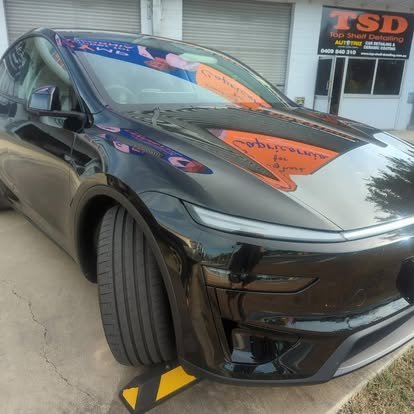
Paint correction means machine polishing away a thin layer of clear coat to level the surface and erase defects. The clear coat is the transparent top layer that carries gloss and protects the colour beneath.
How defect severity changes the estimate
Detailers generally sort paint into three broad bands, and each one changes the labour line on your quote.
- Light defects. Faint wash marring and isolated swirls, usually on a garaged car that's been hand-washed carefully. Typically one polishing stage, and on a well-kept modern car it may be a light single pass rather than a full cut.
- Moderate defects. Visible swirls across most panels, some random deeper scratches, water spot etching from bore or tank water, and dulling from UV. Usually two stages: a cutting stage to remove the bulk of the defects, then a refining stage to restore clarity and gloss.
- Heavy defects. Oxidation, widespread scratches, sanding marks from a previous poor repair, and contamination etched into the clear coat. Often three stages, sometimes with wet sanding on isolated areas, and it can consume a full day or more of labour on its own.
Correction labour, not the coating itself, usually separates a basic quote from a premium one. The coating is a fairly fixed cost per vehicle; the prep is where hours accumulate.
What actually drives the hours
Several things push correction time up beyond headline condition:
- Panel count and complexity. A large SUV with big flat panels can be quicker per square metre than a coupe with tight curves, vents and gloss black trim that all need careful masking and hand work.
- Paint hardness. Some clear coats are soft and correct quickly but mar easily; others are hard and resist marring but take far longer to cut. German performance paint and some Tesla finishes behave quite differently under the polisher.
- Gloss black and piano trim. These show every mark and are easy to burn through, so they're slow, careful work.
- Contamination level. Heavy bonded fallout and tar mean more decontamination time before the polisher even touches the paint.
What correction can't fix
Be clear on the limits. Correction won't remove deep scratches that have gone through the clear coat, and it won't fix rock chips or stone damage. Those need touch-up or refinishing before coating. If your paint has chips, the honest approach is to address them first, then coat, because the coating will protect the repaired area but won't hide the defect.
That's why a quote promising a flawless finish without inspecting your paint is worth questioning. A detailer who hasn't seen the car under proper lighting can't know whether you need one stage or three, and that uncertainty is where estimates drift.
What Is Included in a Ceramic Coating Package
A proper ceramic coating job is a sequence of distinct steps. The fastest way to compare quotes is to see which steps are itemised and which are buried in a lump sum. Broad price ranges tell you little; a line-by-line quote tells you almost everything.
The steps that should appear on a quote
A transparent estimate usually breaks down into something like this:
- Wash and chemical decontamination. A strip wash to remove old wax and sealant, plus iron fallout and tar removal. This is not a maintenance wash; it's the reset before correction.
- Mechanical decontamination. Clay bar or clay mitt treatment to pull bonded contaminants off the clear coat.
- Masking and preparation. Trim, badges, glass and panel gaps masked so polish and coating stay where they belong.
- Paint correction. The stage count should be stated, because this is the largest labour line.
- Panel wipe. An IPA or panel-wipe pass to remove polishing oils so the coating bonds to bare, clean clear coat.
- Coating application. Number of layers and which areas are coated (paint only, or paint plus glass, wheels and trim).
- Curing and quality check. Controlled conditions, inspection under lighting, and instructions on when the car can be driven and washed.
If a quote collapses all of that into one number, you can't tell three stages of correction from a quick polish and a coat.
A practical quote-comparison checklist
When you have two or three estimates in front of you, ask the same questions of each:
- How many correction stages are included, and what defects will they remove?
- Is decontamination included, or charged separately?
- How many coating layers, and which product specifically?
- Which surfaces are coated: paint only, or glass, wheels, calipers and trim as well?
- What curing conditions are used, and how long before I can wash the car?
- What does the warranty actually cover, and what maintenance does it require to stay valid?
- Is there a maintenance wash or inspection included, and at what interval?
A quote that can't answer these clearly is either incomplete or hoping you won't ask. The detailer who walks you through each line is usually the one doing the work properly.
Why the same price can mean different things
Two quotes at a similar figure can be very different jobs. One might include two-stage correction and three coating layers; the other a single light polish and one layer. Same number on the page, very different labour and durability behind it. Itemisation matters more than the headline price.
At GlossBoss, prep and correction are itemised separately from the coating so you can see exactly where the hours go. This transparency makes the trade-off honest: if your paint needs three stages, you'll see why the estimate reflects that rather than discovering it after the fact.
Coating Quality, Brand, and Durability
Not all ceramic coatings are equal. Consumer DIY kits differ significantly from professional-grade products, which bond more effectively to the clear coat and hold their properties longer.
Autotriz 3D Matrix Pro, the coating used at GlossBoss, is formulated for professional application.
Cheaper coatings can look good initially but degrade faster under harsh Australian conditions: intense UV, salt air, extreme heat. A quality coating protects for years; a budget one for months before beading fails.
The brand also affects aftercare: quality coatings come with proper maintenance guidance, so you know what to use, what to avoid and how to keep it performing.
How Long Does Ceramic Coating Last
Ceramic coating durability depends on product quality, application quality and maintenance. Professional-grade coatings typically last 3-5 years or longer with proper care; budget coatings often fail within 1-2 years.
Durability isn't about being scratch-proof or permanent. Ceramic coatings resist light marring and UV damage, but they don't stop rock chips or deep scratches.
Maintenance affects longevity. Regular washing with pH-neutral shampoo keeps the coating in good condition. Harsh chemicals or aggressive scrubbing accelerate degradation.
A quality ceramic coating lasts long enough to justify the investment. You're not waxing every few months; you're protecting your paint's value and appearance for years.
Ceramic Coating vs Paint Protection Film
Paint protection film (PPF) is a different approach: a clear polyurethane film applied to high-impact areas such as the bonnet, guards, mirrors and door handles. Ceramic coatings cover the entire vehicle.
PPF is thicker and more durable against physical damage, stopping rock chips and scratches.
Ceramic coatings cover everything but don't stop impact damage. They protect against UV, chemicals, and minor marring. They make the paint glossy and easier to clean.
Many owners combine both. PPF on high-impact areas, ceramic coating on the rest.
The cost comparison depends on what you're protecting. Full-vehicle PPF is expensive; full-vehicle ceramic coating costs less but offers different protection. For most owners, ceramic coating alone is better value.
Installer Experience and Labour
The installer's skill directly affects coating quality and final cost. An experienced detailer works more efficiently, spots paint issues others miss and applies the coating with precision.
Experienced installers understand paint chemistry: how different clear coats respond to correction, flash times, humidity effects on curing, and how to achieve a flawless finish. That knowledge prevents costly mistakes.
Labour cost reflects that expertise. A detailer with years of experience and a strong reputation charges more than a beginner, but you're paying for skill, not just time.
At GlossBoss, Matty's approach prioritises meticulous prep and paint correction before any coating is applied.
Frequently Asked Questions
What factors affect the cost of ceramic coating?
The main factors are vehicle size, current paint condition, the extent of preparation and correction needed, coating quality and brand, installer experience, and the number of coating layers applied. A small sedan with good paint costs less than a large SUV with swirl marks and scratches. Professional-grade coatings and meticulous surface preparation add to the final price, but deliver better durability and gloss.
Why does paint correction change the cost of ceramic coating?
Paint correction removes swirl marks, light scratches, and oxidation through machine polishing, which is labour-intensive and time-consuming. A car with factory-fresh paint needs only light decontamination and prep; one with years of daily driving may need multiple polishing stages. This extra work significantly increases the total cost, but ensures the coating bonds to flawless paint and reveals maximum gloss and depth.
How long does ceramic coating last?
Professional ceramic coatings typically last 3-5 years with proper maintenance, though durability depends on coating quality, application technique, and how well you maintain your car. Consumer-grade DIY products often fade faster, sometimes within 12-18 months. Factors like coastal salt air, intense UV exposure, and infrequent washing can shorten lifespan. Regular washing and periodic top-ups help extend protection.
Is ceramic coating worth the cost for a luxury car?
For high-end vehicles, ceramic coating offers strong value. It protects your paint from UV damage, chemical contaminants, and minor marring, making cleaning easier and preserving resale appeal. Luxury paint is expensive to repair, so preventative protection pays dividends. The upfront cost is offset by reduced maintenance, fewer detailing visits, and preserved paint condition over years of ownership.

Frequently asked questions
What factors affect the cost of ceramic coating?
The main factors are vehicle size, current paint condition, the extent of preparation and correction needed, coating quality and brand, installer experience, and the number of coating layers applied. A small sedan with good paint costs less than a large SUV with swirl marks and scratches. Professional-grade coatings and meticulous surface preparation add to the final price, but deliver better durability and gloss.
Why does paint correction change the cost of ceramic coating?
Paint correction removes swirl marks, light scratches, and oxidation through machine polishing, which is labour-intensive and time-consuming. A car with factory-fresh paint needs only light decontamination and prep; one with years of daily driving may need multiple polishing stages. This extra work significantly increases the total cost, but ensures the coating bonds to flawless paint and reveals maximum gloss and depth.
How long does ceramic coating last?
Professional ceramic coatings typically last 3–5 years with proper maintenance, though durability depends on coating quality, application technique, and how well you maintain your car. Consumer-grade DIY products often fade faster, sometimes within 12–18 months. Factors like coastal salt air, intense UV exposure, and infrequent washing can shorten lifespan. Regular washing and periodic top-ups help extend protection.
Is ceramic coating worth the cost for a luxury car?
For high-end vehicles, ceramic coating offers strong value. It protects your paint from UV damage, chemical contaminants, and minor marring, making cleaning easier and preserving resale appeal. Luxury paint is expensive to repair, so preventative protection pays dividends. The upfront cost is offset by reduced maintenance, fewer detailing visits, and preserved paint condition over years of ownership.
Tags: ceramic coating cost, what affects ceramic coating cost, car paint correction cost, what is included in a ceramic coating package, how long does ceramic coating last